

Green Building Materials Market to Grow to USD 873.20 Million by 2035 as Sustainable Construction Gains Momentum
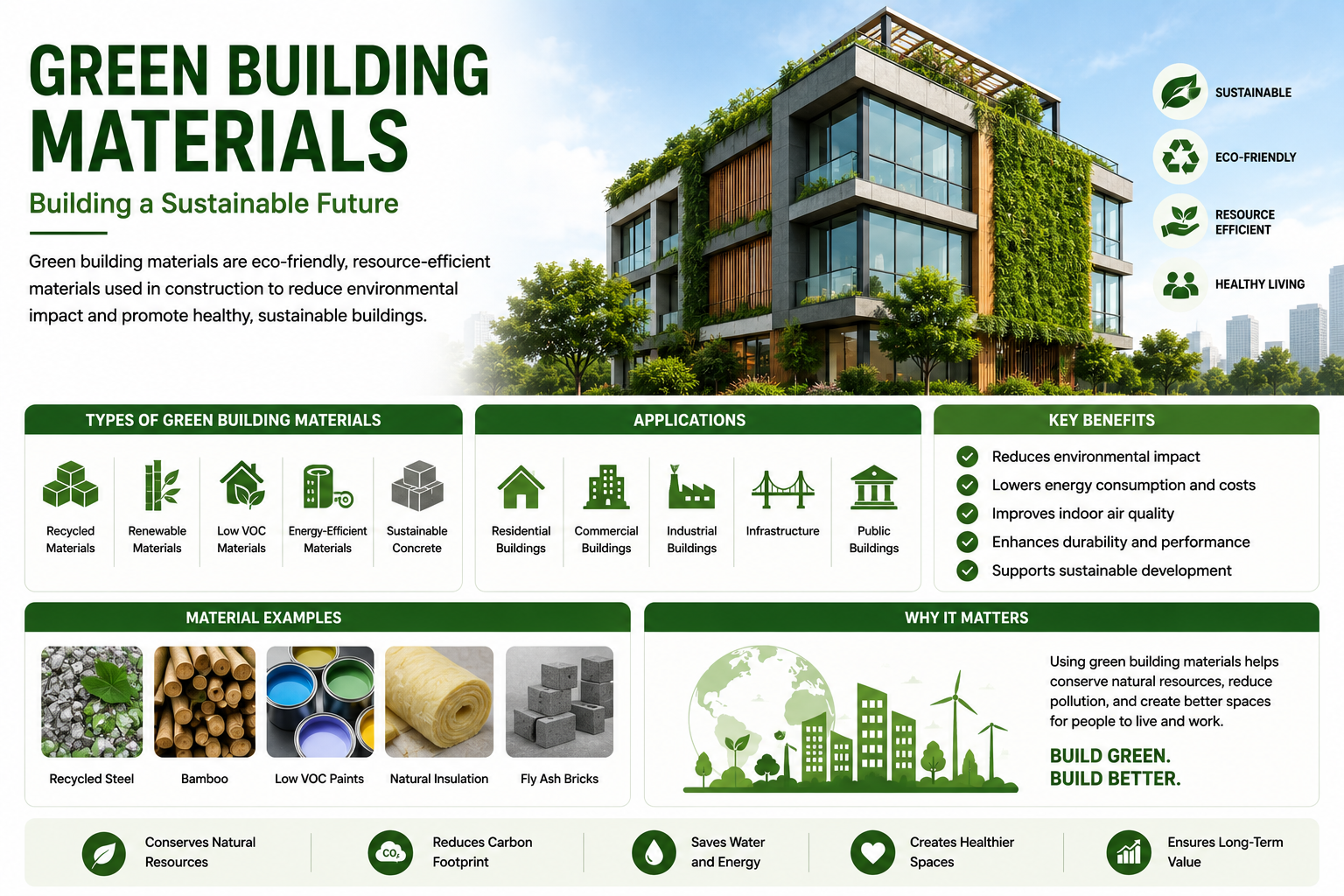
Green Building Materials Market (2026 - 2035)
North America leads the Green Building Material Market with a 43.52% of 2025 revenue share.
BEIJING , CHINA, July 9, 2026 /EINPresswire.com/ -- The construction industry stands at a crossroads. For decades, concrete, steel, and glass were chosen primarily for cost and structural performance, with environmental impact treated as an afterthought. That era is ending. Governments are embedding carbon accounting into procurement rules, investors are demanding embodied-carbon disclosure, and architects are specifying materials based on lifecycle emissions rather than upfront price alone. According to a comprehensive report by Market Research Future (MRFR), the global green building materials market was valued at USD 324.50 million in 2025 and is projected to grow from USD 356.30 million in 2026 to USD 873.20 million by 2035, registering a compound annual growth rate of 10.48%. This double-digit expansion reflects a fundamental rewiring of construction economics, where regulatory compliance, investor ESG mandates, and technological innovation are converging to make sustainability the default specification rather than a premium upgrade.The Regulatory Revolution: Mandates as Market Architects
No force is reshaping the green building materials market more decisively than government procurement mandates. In the United States, the Federal Buy Clean Initiative, codified through Executive Order 14057, requires agencies to prioritize construction materials with published Environmental Product Declarations (EPDs) when spending exceeds USD 35 million per project. The General Services Administration reported that EPD-verified material procurement rose 38% year-over-year in fiscal year 2024, directly channeling an estimated USD 12 billion in institutional spending toward verified low-carbon suppliers. In November 2023, the GSA expanded these mandates to cover flat glass and mineral-wool insulation, adding an estimated USD 4.2 billion in annual addressable demand.
Europe's regulatory architecture is even more prescriptive. The Ecodesign for Sustainable Products Regulation mandates Digital Product Passports (DPPs) for construction products beginning in 2028, requiring full lifecycle carbon disclosure from raw-material extraction through end-of-life. France's RE2020 regulation has already mandated lifecycle carbon accounting for all new buildings since January 2022. The EU's carbon border adjustment mechanism, with carbon prices exceeding EUR 80 per tonne, has shifted cost-competitiveness decisively toward low-carbon alternatives. These frameworks do not merely encourage green procurement; they compel it, creating a structural demand floor that conventional materials cannot meet.
Request for Sample Copy: https://www.marketresearchfuture.com/sample_request/1865
Material Science in Transition: From Portland Cement to Geopolymer
The green building materials market is witnessing a generational transition in its core feedstocks. Conventional Portland cement—responsible for roughly 8% of global CO₂ emissions—is ceding ground to alternatives that cut embodied carbon without sacrificing structural performance.
Calcined-clay blends and geopolymer binders are approaching commercial scale, delivering 40–80% lower embodied carbon than Portland cement. LC3 (Limestone Calcined Clay Cement) technology, validated by the Swiss Federal Institute of Technology, requires only minor kiln modifications, reducing capital expenditure barriers for existing cement producers. Holcim Group's ECOPact Prime, launched in October 2024, achieves 90% lower carbon intensity versus conventional mixes and is now available across 15 European markets. Geopolymer cements produced from industrial byproducts activated with alkaline solutions are approaching price parity in pilot manufacturing lines, suggesting a tipping point within the forecast period.
Mass timber has undergone perhaps the most dramatic transformation. Once confined to low-rise residential projects, cross-laminated timber (CLT) now appears in commercial structures exceeding 18 stories, supported by updated International Building Code provisions adopted across 14 U.S. states and three Canadian provinces. CLT sequesters approximately 1 tonne of CO₂ per cubic meter and provides a 25–45% decrease in embodied carbon for mid-rise structures compared to steel and concrete assemblies. CLT panels char at a predictable rate of approximately 0.65 mm per minute, maintaining structural integrity for fire-resistance ratings up to 2 hours—meeting or exceeding code requirements for most commercial applications. Institutional investors managing upwards of USD 600 billion in real estate now require mass timber in new portfolio additions, creating a specification pull that transcends regulatory mandates.
Cellulose and bio-foam insulation is displacing traditional fiberglass at an 11.24% CAGR, the fastest growth rate among all material types. Derived from post-consumer newsprint and bio-based polyols, these products meet updated vapor-permeability requirements in revised energy codes while offering superior thermal performance. BASF's Elastopor Terra, introduced in January 2024, utilizes 30% castor-oil-based polyols in its spray-foam formulation, targeting the North American retrofit market where closed-cell performance is required.
Application and End-Use Dynamics
Framing captured 24.78% of the green building materials market in 2025, reflecting the structural centrality of concrete, steel, and timber in every building project. The expansion of mass-timber codes to 18 stories has opened mid-rise commercial and institutional construction to CLT and glulam framing, displacing reinforced concrete in projects where carbon budgets are binding constraints.
Insulation is the fastest-growing application segment at a 10.82% CAGR, driven by a dual wave of new-construction energy codes and retrofit mandates. The EU Energy Performance of Buildings Directive recast requires member states to renovate the worst-performing 15% of commercial buildings by 2030, creating a retrofit pipeline valued at EUR 275 billion that heavily favors bio-based and recycled-content insulation systems. The U.S. IECC 2024 and Europe's EPBD recast mandate higher R-values and vapor permeability—specifications that cellulose naturally meets without chemical vapor barriers.
Residential construction accounted for 42.45% of 2025 demand, supported by green-mortgage products offering 10–25 basis-point rate discounts and mandatory energy-code compliance that effectively requires low-carbon material specification. The U.S. Department of Housing and Urban Development's Green Building Initiative has channeled USD 3.8 billion in FHA-insured mortgages toward green-certified homes since 2023.
Commercial projects are the fastest-growing end-use segment at a 10.67% CAGR, as corporate tenants increasingly embed embodied-carbon limits in lease agreements. CBRE reports that 62% of Fortune 500 companies now include green-material clauses in build-to-suit specifications, penalizing landlords who rely on conventional high-carbon finishes. This specification-driven demand creates a structural growth tailwind independent of new-construction cycles.
Purchase Full Copy: https://www.marketresearchfuture.com/checkout?currency=one_user-USD&report_id=1865
Regional Dynamics: North America Leads, Asia-Pacific Accelerates
North America commands 43.52% of the green building materials market, the largest regional share, anchored by Buy Clean mandates and LEED-driven institutional procurement. The United States accounts for 78.30% of regional share, where federal EPD procurement rules and California's pioneering Buy Clean Act have created the world's most mature green-material procurement ecosystem. Canada's Mass Timber Action Plan has catalyzed over CAD 400 million in CLT manufacturing capacity since 2022, while British Columbia's Energy Step Code creates mandatory demand for high-performance insulation and triple-glazed fenestration.
Europe holds the second-largest share at approximately 27.50%, propelled by the EU Taxonomy Regulation and Renovation Wave strategy. Germany's KfW efficiency program disbursed EUR 14 billion in green-building subsidies between 2021 and 2024. France's MaPrimeRénov' scheme disbursed EUR 5.6 billion for residential energy upgrades in 2023 alone. The UK's Future Homes Standard 2025 and PAS 2080 carbon management framework are reshaping specification behavior across the continent.
Asia-Pacific is the fastest-growing region at an 11.76% CAGR, as China's 14th Five-Year Plan targets 50% certified green urban construction by 2030. China's green-building certification base has grown at a compound rate exceeding 20% annually since 2020, with certified floor area surpassing 10 billion square meters in 2024. India's ECBC 2023 mandates minimum green-material specifications for commercial buildings in all Tier-1 cities, creating an addressable demand of USD 8.2 billion per annum by 2028. South Korea's Green New Deal has earmarked KRW 12.1 trillion for carbon-neutral building retrofits through 2030.
South America holds a smaller but growing share, with Brazil dominating at 58.20% of regional share. LEED-certified floor area surpassed 22 million square meters in 2024, and the federal Minha Casa Verde e Amarela housing program now includes green-material procurement requirements for projects exceeding 500 units.
The Middle East & Africa is advancing at a 10.95% CAGR, driven by Saudi Arabia's NEOM project, which specifies 100% green-certified construction materials across its planned 170 km linear development—representing a single-project demand surge estimated at USD 1.2 billion through 2030. The UAE's Estidama Pearl Rating system, mandatory for all new Abu Dhabi construction, has established one of the region's most mature green-procurement frameworks.
Headwinds: Feedstock, Premium Pricing, and Fragmentation
The green building materials market faces meaningful constraints. Feedstock limitations on supplementary cementitious materials are tightening as coal-fired power generation—the primary source of fly ash—declines globally. Producers are pivoting toward calcined natural pozzolans and ground granulated blast-furnace slag, but these alternatives require dedicated processing infrastructure that adds USD 8–12 per tonne to production costs.
Green premium pricing remains a barrier in emerging markets. Low-carbon concrete carries a 15–25% premium above conventional mixtures in developed markets, rising to 30–40% in Southeast Asia and Sub-Saharan Africa where certification infrastructure is nascent. Cost-sensitive developers in price-elastic markets resist specification changes until carbon pricing or procurement regulations internalize the environmental cost of conventional materials.
Report Summary: https://www.marketresearchfuture.com/reports/green-building-materials-market-1865
Fragmented certification landscapes create compliance friction. Globally, there are more than 600 green building rating systems, including LEED, BREEAM, India's GRIHA, and China's Three-Star system. Material suppliers must manage numerous product certifications in parallel, with annual compliance costs topping USD 250,000 for mid-sized firms—deterrents that discourage small producers from entering the market.
Skilled-labor shortages for mass-timber and CLT installation constrain deployment speed. Carpenters and erectors trained in traditional steel and concrete methods require retraining for timber-specific joinery, moisture management, and fire-stopping techniques—a workforce transition that unfolds over years rather than months.
Emerging Opportunities: Circular Economy, Carbon Credits, and AI-Driven Design
Several transformative trends are poised to reshape the green building materials market. Building-as-a-material-bank circular economy models are gaining traction under the European Commission's Level(s) framework, which promotes designing buildings for material recovery rather than demolition. Dutch early adopters have demonstrated 70% material-recovery rates in commercial deconstruction projects, creating second-hand supply chains for recycled steel, timber, and masonry that turn demolition contractors into material suppliers.
Carbon-credit integration is emerging as a financial incentive mechanism. Developers using low-carbon concrete or mass timber can now monetize avoided emissions, with the World Bank estimating this could channel USD 8 billion annually into the green building materials market by 2032. Regulated embodied-carbon caps are expected to follow in the EU and North America by 2028–2030, creating compliance-driven demand that is largely price-inelastic.
AI-driven material selection is compressing design timelines and optimizing outcomes. Generative design platforms like Autodesk's Forma enable architects to optimize material selection for embodied carbon, structural performance, and cost simultaneously, demonstrating 20–30% reductions in material volumes for complex structures. By 2030, an estimated 45% of commercial projects in OECD countries will use AI-assisted material specification, creating a feedback loop that favors suppliers offering machine-readable EPD data.
Digital Product Passports and data monetization represent a novel revenue stream. As DPP mandates expand, manufacturers instrumenting their supply chains with IoT sensors and blockchain-based provenance tracking can license lifecycle data to architects, insurers, and ESG reporting platforms. This data-as-a-service model could generate ancillary revenue equal to 3–5% of core material sales for early movers.
Industrialized construction and modular prefabrication are scaling rapidly. Off-site construction using prefabricated green-material assemblies reduces site waste by 50–70% and construction timelines by 30–40%. Green-certified modules command a 10–15% price premium, and the green building materials market is increasingly serving modular fabrication facilities rather than traditional job sites.
Competitive Landscape
The green building materials market exhibits medium concentration, with an estimated Herfindahl-Hirschman Index of 650–800 and the top five players commanding approximately 28–35% of global revenue. Competition centers on EPD portfolio breadth, carbon-intensity benchmarks, and certification speed rather than price alone.
Holcim Group leads with an estimated 6–9% revenue share, distinguished by its ECOPact low-carbon concrete portfolio and vertical integration from quarry to ready-mix. The company's global EPD leadership and Susteno recycled-aggregate cement position it as the incumbent best placed to navigate the transition from conventional to green construction materials.
BASF SE holds approximately 5–8%, leveraging its chemical innovation platform and annual R&D spend exceeding EUR 2.4 billion. Its Neopor EPS insulation and Elastopor bio-based spray foam address the fastest-growing insulation segment with proprietary polymer chemistry.
Saint-Gobain captures roughly 5–7% through full building-envelope solutions and over 250 published EPDs. Its ISOVER bio-based insulation and Gyproc recycled-content gypsum span the structural and finishing layers of commercial and residential construction.
Kingspan Group specializes in insulated panel systems with its QuadCore technology and Planet Passionate sustainability program, targeting a net-zero manufacturing target by 2030. Owens Corning dominates U.S. fiberglass insulation with PINK NEXT GEN and EcoTouch recycled-content batts, while Interface Inc. has achieved the distinction of becoming the first manufacturer to reach carbon-negative products at scale with its carpet tile portfolio.
Related Report
India Pre-engineered Buildings Market https://www.marketresearchfuture.com/reports/india-pre-engineered-buildings-market-2565
Prefabricated Buildings Market https://www.marketresearchfuture.com/reports/prefabricated-buildings-market-5171
modular portable building market https://www.marketresearchfuture.com/reports/modular-portable-building-market-40650
Asia Pacific Advance Building Materials Market https://www.marketresearchfuture.com/reports/asia-pacific-advance-building-materials-market-12528
california commercial building market https://www.marketresearchfuture.com/reports/california-commercial-building-market-27537
Zero Energy Buildings Market https://www.marketresearchfuture.com/reports/zero-energy-buildings-market-5325
Coil Coatings for Building & Construction Market https://www.marketresearchfuture.com/reports/coil-coatings-for-building-construction-market-22228
Market Research Future
Market Research Future
+ +1 855-661-4441
email us here
Legal Disclaimer:
EIN Presswire provides this news content "as is" without warranty of any kind. We do not accept any responsibility or liability for the accuracy, content, images, videos, licenses, completeness, legality, or reliability of the information contained in this article. If you have any complaints or copyright issues related to this article, kindly contact the author above.
