

Automotive Bumper Market to Reach USD 900 Million by 2035, Growing at 4.14% CAGR
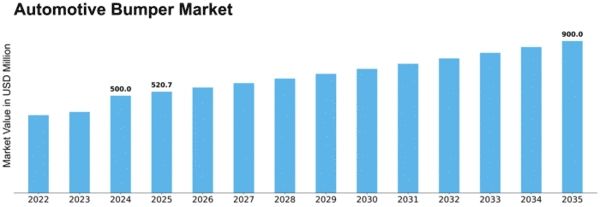
Automotive Bumper Market
North America is poised to maintain its leadership in the automotive bumper market, holding a significant market share of 250.0 million.
NEW YORK, NY, UNITED STATES, September 8, 2026 /EINPresswire.com/ -- According to Market Research Future, the Automotive Bumper Market is projected to reach USD 900 Million, with a CAGR of 4.14% by 2035. This steady growth trajectory reflects the evolving dynamics of the automotive industry, where bumpers have transcended their traditional role as mere protective components to become integral elements of vehicle design, aerodynamics, and safety systems. The market's consistent expansion is underpinned by rising vehicle production, increasing consumer focus on vehicle aesthetics, and stringent government regulations regarding pedestrian safety and vehicle crashworthiness.Market Overview
Automotive bumpers are structural components mounted at the front and rear of vehicles, designed to absorb impact energy during collisions, protect critical vehicle systems, and enhance overall safety. Modern bumpers are sophisticated assemblies that integrate sensors, cameras, lighting systems, and aerodynamic features while maintaining their primary function of impact absorption. The market encompasses a wide range of products manufactured from various materials including composite plastics, metals, and fiber-based composites, catering to both original equipment manufacturer (OEM) requirements and aftermarket replacement needs.
The growth drivers for the automotive bumper market are multifaceted and interconnected. Rising global vehicle production, particularly in emerging economies, serves as the primary catalyst for market expansion. As automotive manufacturing scales up to meet growing consumer demand, the requirement for bumpers as essential vehicle components naturally increases. Additionally, the increasing average vehicle age in developed markets is driving aftermarket demand, as older vehicles require bumper replacements due to wear, damage, or cosmetic upgrades.
Consumer preferences have evolved significantly, with modern buyers placing greater emphasis on vehicle aesthetics and customization options. Bumpers have become key styling elements that define a vehicle's character, leading manufacturers to invest in innovative designs, color-matched finishes, and integrated aerodynamic features. The growing popularity of SUVs and crossovers, which typically feature larger and more complex bumper assemblies, has further contributed to market growth.
Technological developments are transforming the bumper landscape at an accelerating pace. The integration of advanced driver assistance systems sensors, ultrasonic parking sensors, cameras, and radar units into bumpers has turned these components into critical enablers of vehicle intelligence. Smart bumpers equipped with sensors for autonomous parking, collision avoidance, and pedestrian detection are becoming increasingly common across vehicle segments. Furthermore, the development of lightweight materials that maintain or enhance structural integrity while reducing vehicle weight is supporting fuel efficiency and electric vehicle range optimization.
Policy and regulatory influences are shaping market dynamics significantly. Governments worldwide have implemented stringent safety standards mandating specific impact absorption capabilities, pedestrian protection requirements, and crash test performance criteria. These regulations compel manufacturers to continuously improve bumper designs and materials, driving innovation and investment in research and development. Environmental regulations promoting vehicle lightweighting and recyclability are also influencing material choices and manufacturing processes.
The demand outlook for automotive bumpers remains positive, supported by the steady recovery of global automotive production post-pandemic, increasing vehicle parc, and the continuous evolution of bumper functionality. The shift toward electric vehicles presents additional opportunities, as these vehicles require specialized bumper designs that accommodate cooling requirements, aerodynamic efficiency, and unique styling cues.
📍 Get Free Sample Report for Detailed Market Insights:
https://www.marketresearchfuture.com/sample_request/3774
Market Segmentation
The automotive bumper market is segmented based on materials, positioning, end market, and regional analysis to provide a comprehensive understanding of the industry landscape.
By Materials: The market is categorized into Composite Plastic, Metal, and Fiber. Composite plastic bumpers dominate the market due to their lightweight properties, design flexibility, corrosion resistance, and cost-effectiveness. These materials include polypropylene, polyurethane, and polycarbonate blends that offer excellent impact absorption characteristics while enabling complex styling and color integration. Metal bumpers, typically manufactured from steel or aluminum, continue to hold significant market share, particularly in commercial vehicles and heavy-duty applications where maximum strength and durability are paramount. Steel bumpers offer superior impact resistance at lower costs, while aluminum bumpers provide an excellent strength-to-weight ratio, making them increasingly popular in premium and performance vehicles. Fiber-based materials, including carbon fiber and fiberglass composites, represent a growing segment driven by the demand for ultra-lightweight components in high-performance and luxury vehicles. These materials offer exceptional strength, minimal weight, and unique aesthetic possibilities, albeit at higher cost points.
By Positioning: The market is divided into Front Ends and Rear Ends. Front end bumpers account for the larger market share due to their greater exposure to impact forces, more complex aerodynamic requirements, and integration of advanced safety sensors and cameras. Front bumpers are designed to meet stringent pedestrian protection regulations and crash test standards, requiring sophisticated energy absorption structures and deformable surfaces. Rear end bumpers, while also critical for safety, typically feature simpler designs with less aerodynamic complexity, though they increasingly incorporate parking sensors, cameras, and trailer hitch provisions. Both segments are witnessing continuous innovation in materials and design to meet evolving safety standards and consumer preferences.
By End Market: The market is segmented into OEM and Aftermarket. The OEM segment dominates the market, driven by vehicle production volumes and the preference for factory-fitted, color-matched, and warranty-backed bumpers. OEM bumpers are designed to meet specific vehicle requirements, ensuring perfect fit, finish, and performance. The aftermarket segment represents a substantial and growing market, driven by vehicle accidents, cosmetic upgrades, customization trends, and the increasing vehicle parc globally. Aftermarket bumpers offer consumers a range of options including OEM-equivalent replacements, performance-oriented designs, and custom styling solutions. The Automotive Exterior Accessories Market plays a complementary role, with bumpers often serving as platforms for additional accessories like grille guards, lower spoilers, and lighting enhancements that further personalize vehicles.
By Region: The market analysis covers North America, Europe, Asia-Pacific, and Rest of the World. Asia-Pacific dominates the global market, driven by massive automotive production in China, India, Japan, and South Korea, coupled with rapid vehicle ownership growth and increasing consumer spending on vehicle aesthetics and safety. North America and Europe follow closely, supported by high vehicle parc, strong aftermarket demand, and stringent safety regulations.
🛒 You can buy this market report at:
https://www.marketresearchfuture.com/checkout?currency=one_user-USD&report_id=3774
Regional Analysis
Asia-Pacific represents the largest and fastest-growing regional market for automotive bumpers, accounting for a significant share of global demand. China leads the region with the world's largest automotive manufacturing base and rapidly growing domestic vehicle consumption. The country's aggressive push toward electric vehicles, supported by government incentives and infrastructure development, is creating substantial demand for specialized bumper designs that accommodate EV-specific requirements. India's automotive market continues to expand rapidly, driven by rising incomes, urbanization, and government initiatives promoting manufacturing and vehicle ownership. Japanese and South Korean manufacturers, known for their engineering excellence and technological innovation, continue to develop advanced bumper solutions that incorporate cutting-edge materials and integrated sensor technologies. Southeast Asian nations, including Thailand, Indonesia, and Malaysia, are emerging as significant automotive production hubs, further driving regional market growth.
North America remains a mature yet dynamic market, characterized by high vehicle parc, strong consumer spending on vehicle customization, and robust aftermarket activity. The United States dominates the regional market, with consumers showing strong preference for pickup trucks, SUVs, and crossovers that feature substantial bumper assemblies. The growing popularity of off-road vehicles and adventure-oriented lifestyle vehicles is driving demand for specialized bumpers with enhanced durability, winch mounts, and accessory integration capabilities. Canadian and Mexican markets continue to grow, supported by increasing automotive production and rising vehicle ownership rates. The region's well-established insurance industry and vehicle repair infrastructure ensure consistent demand for replacement bumpers following accidents.
Europe represents a technologically advanced market with strong emphasis on safety, environmental sustainability, and design excellence. Western European countries, particularly Germany, France, and the United Kingdom, lead in automotive innovation, with manufacturers continuously pushing the boundaries of bumper design and functionality. European regulations regarding pedestrian protection, cyclist safety, and emissions reduction significantly influence bumper design, driving the adoption of deformable structures, energy-absorbing materials, and lightweight composites. The region's luxury and premium vehicle segment, featuring brands like BMW, Mercedes-Benz, and Audi, demands sophisticated bumper solutions that combine aesthetic appeal with advanced functionality. Eastern European markets are emerging as significant automotive production centers, attracting investments from global manufacturers and driving regional market expansion.
Rest of the World, encompassing Latin America, the Middle East, and Africa, represents diverse markets at various stages of development. Latin American markets, particularly Brazil and Argentina, show steady growth supported by recovering automotive production and increasing consumer demand for modern vehicles. The Middle East, with its high concentration of luxury vehicles and large SUVs, demonstrates strong demand for premium bumper solutions and aftermarket customization options. African markets, while currently small, hold significant potential as automotive infrastructure develops and vehicle ownership rates increase from low bases. The Automotive Front End Collision Warning System Market is closely tied to bumper evolution, as the integration of collision warning sensors and autonomous emergency braking components within bumpers becomes increasingly standardized across vehicle segments.
Competitive Landscape and Key Players
The automotive bumper market is characterized by intense competition, with a mix of global automotive suppliers, specialized manufacturers, and regional players competing for market share. Leading companies are focusing on strategic partnerships, technological innovation, capacity expansion, and portfolio diversification to strengthen their market position.
Key players operating in this space include Magna International Inc., Plastic Omnium, Faurecia, Valeo, Toyoda Gosei Co. Ltd., Hyundai Mobis, Samvardhana Motherson International Limited, Benteler International, Gestamp Automocion, and Rehau Group. These industry leaders leverage their extensive manufacturing capabilities, global footprints, and strong relationships with major automotive OEMs to maintain dominant market positions.
Strategic developments are shaping the competitive landscape. Major suppliers are forming joint ventures and partnerships with automotive manufacturers to develop integrated front-end modules that include bumpers, grilles, lighting systems, and sensors as single assemblies. This modular approach reduces assembly complexity, lowers costs, and improves vehicle quality. Acquisitions and mergers are consolidating expertise in lightweight materials, advanced composites, and sensor integration, enabling companies to offer comprehensive solutions that meet evolving industry requirements.
Innovation and technology initiatives are accelerating across the bumper industry. Companies are investing heavily in research and development to create smart bumpers with integrated sensors for autonomous driving and advanced safety features. The development of self-healing materials that can recover from minor scratches and impact damage represents an emerging area of innovation. Sustainable manufacturing practices, including the use of recycled materials and bio-based polymers, are gaining traction as environmental concerns become increasingly important to consumers and regulators alike.
Manufacturers are also focusing on production efficiency and cost optimization through automation, advanced manufacturing processes, and supply chain localization. The adoption of injection molding, compression molding, and additive manufacturing technologies is enabling the production of complex bumper designs with reduced weight, improved aesthetics, and enhanced performance characteristics.
Latest Industry News and Developments
Recent industry developments reflect the dynamic nature of the automotive bumper market. A leading automotive supplier has unveiled a new lightweight composite bumper system that reduces component weight by up to 30% while maintaining or exceeding current safety performance standards. This innovative solution utilizes advanced thermoplastics and engineered polymers to achieve significant weight reduction without compromising structural integrity, supporting automakers' efforts to improve fuel efficiency and extend electric vehicle range.
In a significant development focused on sustainability, a major bumper manufacturer has announced the expansion of its recycling capabilities, enabling the recovery and reuse of up to 95% of production waste materials. The company has also developed a new family of bumpers incorporating recycled ocean plastics and bio-based materials, demonstrating the industry's commitment to environmental responsibility and circular economy principles.
The integration of advanced sensor technologies into bumpers continues to accelerate, with several suppliers launching new front-end modules that seamlessly incorporate radar, lidar, camera, and ultrasonic sensors. These integrated solutions support Level 2+ and Level 3 autonomous driving capabilities, enabling features such as highway pilot, traffic jam assist, and automated parking. The trend toward sensor-rich bumpers is expected to intensify as vehicle automation levels advance and safety regulations become more stringent.
Market Challenges and Opportunities
The automotive bumper market faces several challenges that could impact growth trajectories. Raw material price volatility, particularly for polymers, metals, and composites, poses significant cost pressures on manufacturers, affecting profit margins and pricing strategies. Supply chain disruptions, exacerbated by geopolitical tensions and global events, continue to challenge production schedules and inventory management, emphasizing the need for diversified sourcing strategies and increased localization.
Technological complexity presents both a challenge and opportunity, as the integration of multiple sensors, lighting systems, and active aerodynamic features increases design complexity, manufacturing costs, and quality control requirements. Manufacturers must continuously invest in advanced production capabilities, testing facilities, and quality assurance processes to meet evolving customer expectations and regulatory standards.
The transition toward electric vehicles presents significant opportunities for market participants. EVs require specialized bumper designs that accommodate cooling requirements for batteries and powertrain components, aerodynamic efficiency for range optimization, and unique styling cues that differentiate electric models from conventional vehicles. The growing demand for vehicle personalization and customization creates opportunities for aftermarket bumper solutions that offer unique styling, enhanced functionality, and improved performance.
Emerging opportunities are abundant in the evolving market landscape. The development of sustainable materials, including recyclable composites, bio-based polymers, and lightweight metals, offers manufacturers the ability to differentiate their products while supporting environmental sustainability goals. The growing adoption of connected vehicle technologies presents opportunities for smart bumpers that communicate with infrastructure, other vehicles, and cloud-based systems to enhance safety and enable new services.
To explore more market insights, visit us at:
https://www.marketresearchfuture.com/reports/automotive-bumper-market-3774
Final Market Summary
Key factors expected to influence future development include the pace of electric vehicle adoption, advancements in sensor and camera technologies, and the evolution of autonomous driving standards. Regulatory developments regarding pedestrian protection, crash safety, and environmental sustainability will continue to shape product development strategies and material choices. Consumer preferences for personalized, stylish, and technologically advanced vehicles will drive innovation across all vehicle segments.
The transition toward connected and autonomous vehicles represents a fundamental shift in the industry, positioning bumpers as essential platforms for sensor integration and data collection. As vehicles increasingly function as connected devices, the importance of sophisticated bumper systems will only continue to grow, ensuring steady demand and market expansion throughout the forecast period and beyond.
More Related Reports from MRFR Library:
Automotive Adaptive Front Light Market : https://www.marketresearchfuture.com/reports/automotive-adaptive-front-light-market-5327
Semi Trailer Market : https://www.marketresearchfuture.com/reports/semi-trailer-market-5369
Automotive Anti Lock Braking System Market : https://www.marketresearchfuture.com/reports/anti-lock-braking-system-market-5413
Embedded System for Electric Vehicle Market : https://www.marketresearchfuture.com/reports/embedded-system-electric-vehicle-market-5414
Electric Two Wheeler Market : https://www.marketresearchfuture.com/reports/electric-two-wheeler-market-5456
Automotive Active Safety System Market : https://www.marketresearchfuture.com/reports/automotive-active-safety-system-market-5469
Low Speed Vehicle Market : https://www.marketresearchfuture.com/reports/low-speed-vehicle-market-5488
Off Road High Performance Vehicle Market : https://www.marketresearchfuture.com/reports/off-road-high-performance-vehicle-market-5526
Automotive Seat Heater Market : https://www.marketresearchfuture.com/reports/automotive-seat-heater-market-5542
All Terrain Vehicle Market : https://www.marketresearchfuture.com/reports/all-terrain-vehicle-market-5594
Market Research Future
Market Research Future
+1 855-661-4441
email us here
Legal Disclaimer:
EIN Presswire provides this news content "as is" without warranty of any kind. We do not accept any responsibility or liability for the accuracy, content, images, videos, licenses, completeness, legality, or reliability of the information contained in this article. If you have any complaints or copyright issues related to this article, kindly contact the author above.
