

Vietnam Veteran Daryl Farry Publishes Two-Generation War Account, "Medics at War"
News originally published by
EIN Presswire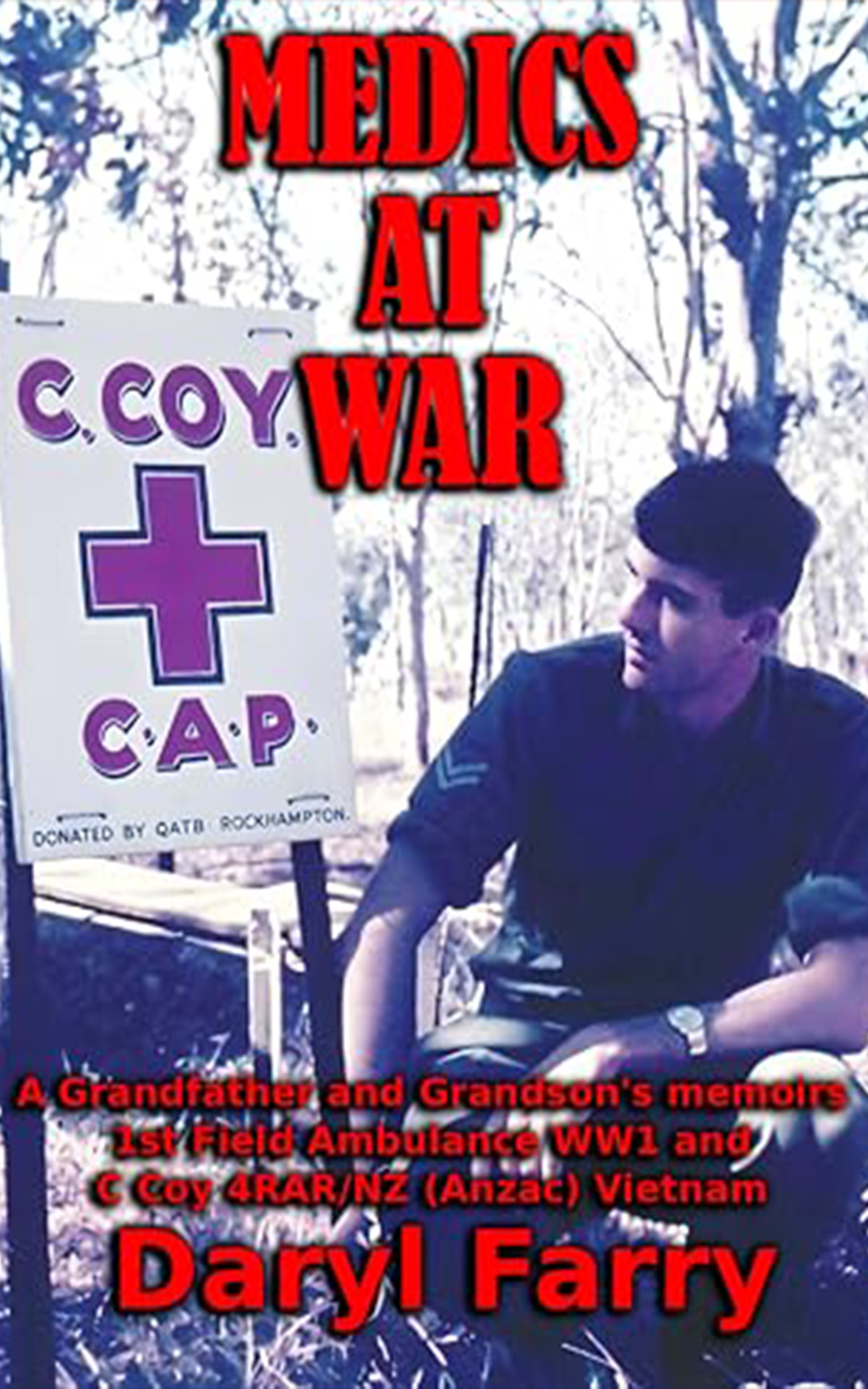
𝗧𝘄𝗼 𝗪𝗮𝗿𝘀, 𝗢𝗻𝗲 𝗙𝗮𝗺𝗶𝗹𝘆
The first half of "Medics at War" follows James (Dave) Ferguson McClelland, Farry's grandfather, who served as a stretcher bearer with the Australian 1st Field Ambulance, 1st Division, during the First World War. His service took him from training in Egypt to the casualty clearing stations of France, including periods at Pozières and a post known among stretcher bearers as Casualty Corner.
The second half follows Farry himself, who served with 'C' Company, 4th Battalion, Royal Australian Regiment, attached to the ANZAC Battalion formed with New Zealand forces, during the Vietnam War. McClelland's journey began with a troopship voyage from Australia to Egypt, where his unit set up hospital wards before later crossing the Mediterranean to Toulon and making its way north to the front by rail. Farry's own record opens with recruit training at Singleton, New South Wales, followed by postings at Greenbank Military Camp and 1 Military Hospital before his attachment to the battalion he would deploy with.
Neither section sets out to record the full history of the units involved. Instead, each stays with the postings, movements and day-to-day experiences of one man within them, from training through deployment and home again.
𝗕𝘂𝗶𝗹𝘁 𝗙𝗿𝗼𝗺 𝗟𝗲𝘁𝘁𝗲𝗿𝘀 𝗮𝗻𝗱 𝗗𝗶𝗮𝗿𝗶𝗲𝘀
McClelland's chapters were pieced together from his wartime diary, personal letters and archival material kept within the family for decades. Farry's own chapters draw on letters he sent home during his two years of service, returned to him by his family many years after his discharge. Alongside harder passages covering casualties, illness and loss, both accounts include lighter moments. Among them is an extended run of rugby and cricket matches played between postings during the First World War, arranged whenever units found themselves with a spare afternoon and an opposing side willing to take them on.
Farry's own chapters include quieter interludes as well, among them a period of rest and recreation leave flown out of Nui Dat to Hong Kong partway through his tour, arranged through the American military alongside troops from other allied nations. Both accounts were assembled well after the events they describe, with McClelland's material reconstructed from documents that survived him and Farry's drawn from correspondence his family kept and eventually returned to him.
𝗔 𝗟𝗶𝗳𝗲 𝗼𝗳 𝗦𝗲𝗿𝘃𝗶𝗰𝗲 𝗕𝗲𝘆𝗼𝗻𝗱 𝘁𝗵𝗲 𝗕𝗮𝘁𝘁𝗹𝗲𝗳𝗶𝗲𝗹𝗱
Farry served in the National Service from 1967 to 1969, training with the Royal Australian Army Medical Corps before being posted to 11 Field Ambulance in Brisbane and later attached to his infantry battalion ahead of its deployment to Vietnam. His duties included the health and welfare of around 120 troops, along with training infantrymen as stretcher bearers and hygiene inspectors.
After returning to Australia, he spent thirty years working as an ambulance officer in Queensland. He and his wife later settled in Adelaide, South Australia, where they now live near their son and grandson. "Medics at War" is Farry's first published book, predating his later works of fiction.
𝗡𝗼𝘄 𝗶𝗻 𝗟𝗶𝗯𝗿𝗮𝗿𝗶𝗲𝘀 𝗮𝗻𝗱 𝗛𝗶𝘀𝘁𝗼𝗿𝗶𝗰𝗮𝗹 𝗖𝗼𝗹𝗹𝗲𝗰𝘁𝗶𝗼𝗻𝘀
Since its release, "Medics at War" has been submitted to a number of public collections, among them the South Australian State Library, the Adelaide City Council Library and the Onkaparinga City Council Library. Its intended readership includes high school libraries, historical societies and military museums, along with readers researching or with a general interest in military history. The book does not focus on strategy or the broader course of either war. Its two accounts instead stay close to what one man experienced, decades apart, while wearing the same kind of uniform and carrying the same kind of kit onto very different battlefields.
The book is dedicated to the members of the Australian 1st Field Ambulance who served in the First World War and to 'C' Company, 4th Battalion, who served in Vietnam between 1968 and 1969, connecting the two halves of the book to the wider units both men were part of.
Bracken Joseph
Australian Book Publishers
+61 7 2116 0858
Legal Disclaimer:
EIN Presswire provides this news content "as is" without warranty of any kind. We do not accept any responsibility or liability for the accuracy, content, images, videos, licenses, completeness, legality, or reliability of the information contained in this article. If you have any complaints or copyright issues related to this article, kindly contact the author above.
